
How zero-knowledge proofs verify data without revealing it
Zero-knowledge proofs (ZKPs) allow one party to prove a statement is true without revealing the underlying data. This enables privacy-preserving verification in digital interactions where sensitive information must remain confidential.
Think of it like proving you are over the legal drinking age without showing your driver's license. The verifier (the bartender) only needs to know that the age condition is met. They do not need to see your name, address, or exact birthdate. The proof confirms the truth of the claim while keeping all other details hidden.
In a standard digital interaction, you often have to surrender sensitive information to gain access to a service. ZKPs flip this dynamic. The prover generates a cryptographic proof that demonstrates compliance with a set of rules. The verifier checks this proof and accepts it as valid. Crucially, the verifier learns nothing about the underlying data that generated the proof.
This process relies on three core properties to ensure security and reliability:
The practical application of this dynamic is vast. For instance, you can prove you own a passport signed by a valid government key for an age value over 18, without revealing your exact name or country of origin Wikipedia. This ability to verify tasks without revealing data is the foundation of privacy-preserving verification in modern cryptography.
Comparing zk-SNARKs, zk-STARKs, and Bulletproofs
Choosing a zero-knowledge proof system involves balancing proof size, verification speed, and trust requirements. No single protocol dominates all use cases; each has distinct trade-offs that determine its suitability for verifying complex tasks.
The following comparison highlights the core differences between zk-SNARKs, zk-STARKs, and Bulletproofs.
| Feature | zk-SNARKs | zk-STARKs | Bulletproofs |
|---|---|---|---|
| Proof Size | Small (KB) | Large (MB) | Medium (KB-MB) |
| Verification Time | Fast | Fast | Slow |
| Trust Setup | Required | Not Required | Not Required |
| Quantum Resistance | No | Yes | No |
zk-SNARKs (Succinct Non-Interactive Arguments of Knowledge) are the most mature option. They produce small proofs that verify quickly, making them ideal for blockchain scalability and mobile devices. However, they require a trusted setup ceremony, which introduces a one-time risk if the initial parameters are compromised.
zk-STARKs (Scalable Transparent Arguments of Knowledge) eliminate the need for a trusted setup, offering stronger security guarantees. They are quantum-resistant and scale better for very large computations. The trade-off is larger proof sizes, which can be costly to transmit and store on-chain.
Bulletproofs are designed for privacy-focused applications like confidential transactions. They do not require a trusted setup and produce relatively small proofs. However, verification is slower than SNARKs or STARKs, and they do not scale as well for extremely complex circuits.
For most task verification needs, zk-SNARKs remain the standard due to their efficiency. STARKs are gaining traction for long-term security and quantum resilience. Bulletproofs are best suited for niche privacy applications where proof size matters more than verification speed.
Verifying tasks without exposing raw data
In bounty and task markets, the value of a submission often lies in the underlying intellectual property. A developer submitting compiled code, an artist providing a final render, or a consultant delivering a strategy report all face the same dilemma: how to prove the work is done without handing over the source files or sensitive data to the client or the public ledger.
Zero-knowledge proofs solve this by allowing a worker to generate a cryptographic receipt that confirms the task was completed according to the rules, without revealing the actual content. This shifts the trust model from "blind trust" to "mathematical verification." The verifier receives a proof that the input satisfied the required conditions, but learns nothing about the input itself.
The mechanics of proof
Consider a bounty for a specific cryptographic hash. The worker computes the hash of their proprietary data. The ZKP protocol then generates a proof that the worker possesses data that hashes to the target value. The client verifies this proof against the public parameters. If valid, the payout triggers. The client gets the confirmation they need; the worker keeps their data private.
This mechanism is critical for high-stakes tasks where confidentiality is a prerequisite for participation. Without ZKPs, companies might refuse to post sensitive R&D challenges on decentralized platforms, fearing IP leakage. With ZKPs, the platform becomes a neutral ground where verification is guaranteed, but exposure is not.
Real-world application
The Ethereum Foundation and NIST recognize ZKPs as a core tool in privacy-enhancing cryptography. They enable proving the truthfulness of a statement without disclosing the statement's contents. In a task market, this means a worker can prove they have the necessary credentials, such as a verified degree or a specific security clearance, without uploading their personal documents to a potentially vulnerable database.
This approach protects both parties. The client avoids the risk of handling sensitive documents, and the worker avoids the risk of identity theft or data scraping. The proof is ephemeral and specific to the task, leaving no residual data trail.
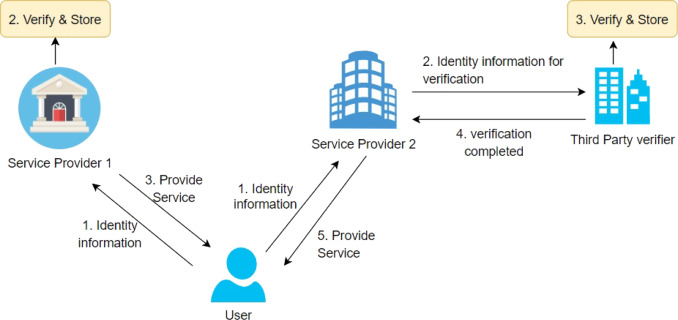
Market adoption and technical choices
Zero-knowledge proofs have moved from theoretical cryptography to production-ready infrastructure, particularly within decentralized labor markets. The technology allows platforms to verify worker credentials or task completion without exposing sensitive personal data. This shift addresses the primary friction point in privacy-preserving gig economy platforms: the need for trust without transparency.
However, adoption is constrained by significant computational costs and latency. Generating a zero-knowledge proof requires intensive processing, which can delay real-time interactions. While newer protocols like SNARKs and STARKs have improved efficiency, the overhead remains higher than traditional cryptographic methods. For decentralized labor markets, this latency can impact user experience, especially for tasks requiring immediate verification.
The tradeoff is between privacy and performance. Platforms must decide whether the value of data protection justifies the added computational burden. As hardware accelerates and software optimizes, these costs are expected to decrease, making zero-knowledge proofs more viable for high-frequency, low-latency applications.
Frequently asked: what to check next
How do zero-knowledge proofs protect user privacy?
Zero-knowledge proofs protect privacy by allowing a user to verify a statement (e.g., "I am over 18") without revealing the underlying data (e.g., birthdate or ID). The verifier only receives a cryptographic proof that the condition is met, ensuring no sensitive personal information is exposed or stored.
What is the difference between zk-SNARKs and zk-STARKs?
The main difference lies in trust setup and proof size. zk-SNARKs produce smaller proofs and verify faster but require a trusted setup ceremony. zk-STARKs are quantum-resistant and do not require a trusted setup, but they generate larger proofs that are more expensive to transmit and store.
Can zero-knowledge proofs be used for identity verification?
Yes. ZKPs enable selective disclosure, allowing users to prove specific attributes of their identity (like citizenship or age) without revealing their full identity document. This reduces the risk of identity theft and data breaches associated with centralized identity databases.
No comments yet. Be the first to share your thoughts!