
What ZK verified tasks mean for freelancers
ZK verified tasks allow you to prove you completed work without showing the underlying data or your identity. In a traditional gig, submitting a report or code snippet often means handing over sensitive client information or revealing your location and personal details. Zero-knowledge proofs change this dynamic by letting you generate a cryptographic receipt that confirms the work is valid while keeping the source material hidden.
This mechanism is particularly useful for privacy-conscious workers. Instead of uploading raw files to a central server that could be breached or misused, you submit a proof. The client’s system verifies the proof matches their requirements. If the proof checks out, the smart contract releases payment. You get paid, and no one sees the actual work product unless you choose to share it.
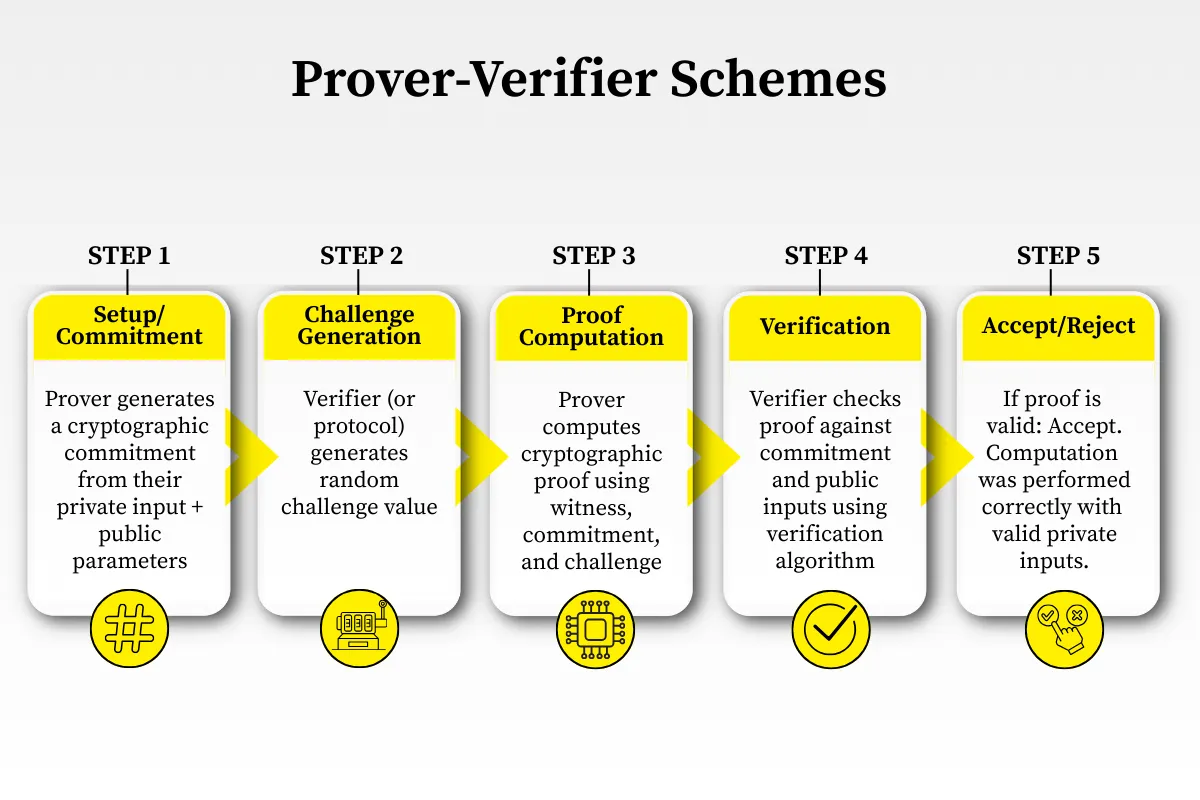
The process relies on a prover-verifier model. You act as the prover, generating evidence that a specific computation or task was performed correctly. The client or platform acts as the verifier, checking that evidence against predefined rules. This separation ensures that confidentiality is maintained throughout the transaction. It is not just about security; it is about control over your own data.
For freelancers, this means you can take on projects that require high levels of discretion. Whether you are handling financial data, legal documents, or proprietary algorithms, ZK verified tasks let you demonstrate competence without exposing the very things that make your work valuable or sensitive.
Choose a ZK proof verification network
Selecting the right backend infrastructure is the foundation for running ZK verified tasks efficiently. A verification network acts as the engine that validates cryptographic proofs without requiring your own nodes to perform the heavy computational lifting. This separation allows you to focus on building the application logic while relying on specialized networks for security and speed.
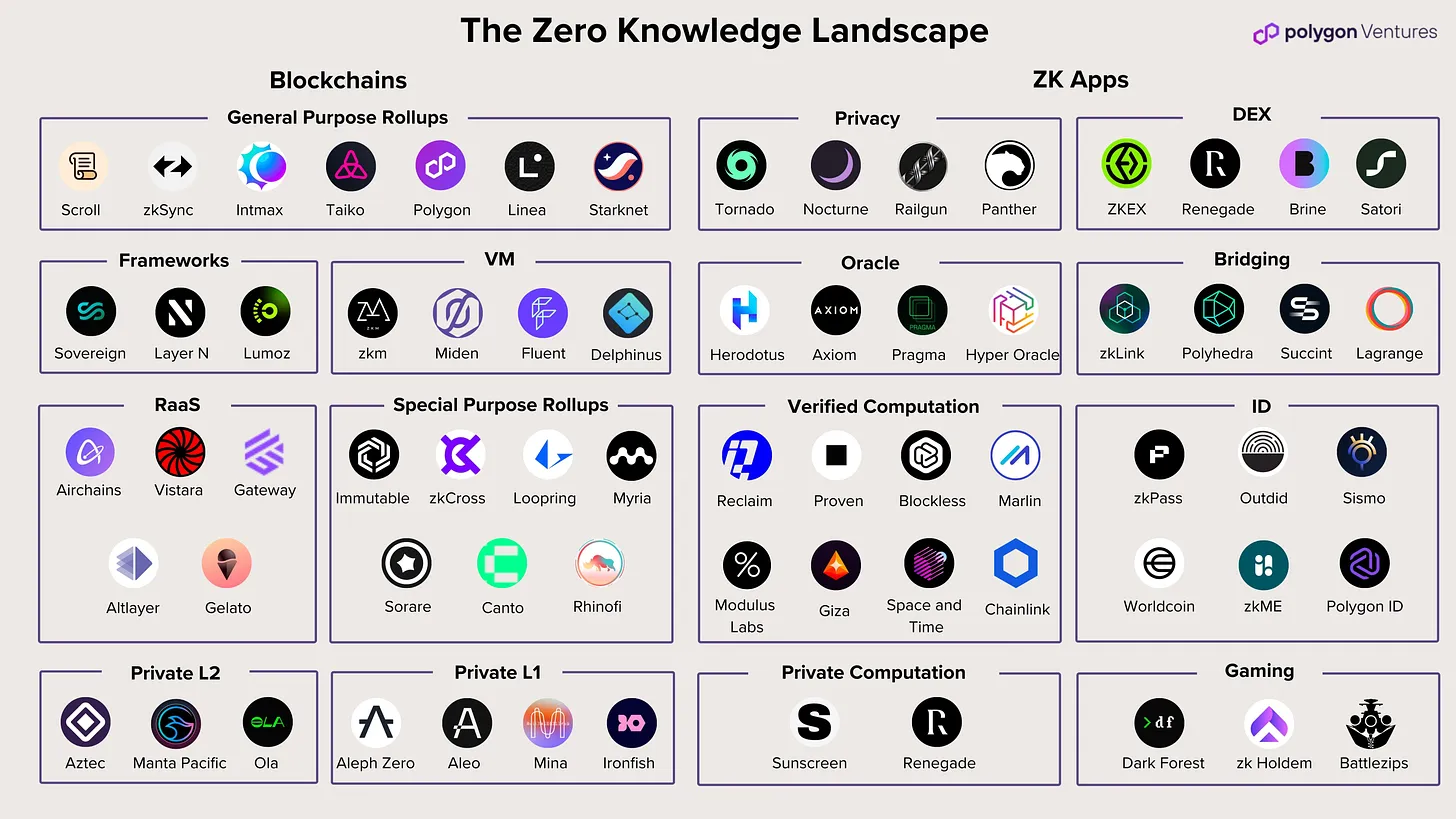
When evaluating options, prioritize networks that support your specific proving system—whether that is STARKs, SNARKs, or Plonk. The goal is to find a service that offers low latency and predictable costs for the volume of ZK verified tasks you intend to process. Below is a comparison of the leading infrastructure providers to help you decide.
| Network | Primary Focus | Cost Model | Privacy Guarantee |
|---|---|---|---|
| zkVerify | Universal verification for all ZK types | Low-cost per verification | Mathematically sound verification |
| ZKProof | Formal verification standards | Community-driven / Open source | Standard cryptographic guarantees |
| Boundless | Native blockchain integration | Transaction fee based | Native private transactions |
| Polygon zkEVM | EVM-compatible scaling | Gas fees on Polygon | Layer-2 privacy standards |
Generate proofs for off-chain task data
ZK verified tasks rely on generating cryptographic evidence that a computation occurred without exposing the underlying data. This process transforms raw work outputs—such as code commits, design files, or database queries—into a compact proof that any verifier can check instantly.
The workflow follows a strict sequence: define constraints, run the local prover, output the proof file, and submit it to the verifier. Each step ensures the integrity of the ZK verified tasks while maintaining complete privacy for the participant.
1. define task limits to account for
Before generating a proof, you must specify the exact rules the prover must follow. This involves creating a circuit or program that describes the valid range of inputs and the expected output format. For ZK verified tasks, this step is critical because it establishes the "statement" being proven. If the constraints are too loose, the proof may not adequately verify the work's quality.
2. Run local prover
The local prover takes your private task data and the defined circuit to generate the cryptographic proof. This computation happens entirely on your machine, ensuring that the raw data never leaves your environment. The prover uses complex mathematical algorithms to create a succinct argument that the task was completed correctly according to the constraints. This is the core engine of ZK verified tasks, where privacy and verification intersect.
3. Output proof file
Once the local prover finishes, it outputs a small binary file containing the proof. This file is typically only a few kilobytes in size, regardless of how large the original task data was. This efficiency is what makes ZK verified tasks scalable. You can now transmit this lightweight proof to the network without carrying the heavy burden of the original data.
4. Submit to verifier
The final step is submitting the proof file to a verifier contract or service. The verifier checks the proof against the public parameters of the circuit. If the proof is valid, the verifier confirms that the task was completed correctly without ever seeing the actual work. This confirmation is the ultimate goal of ZK verified tasks, providing trustless assurance of work quality.
Write the circuit logic that defines valid inputs and outputs for your specific task type.
Execute the prover locally to generate the cryptographic proof from your private data.
Save the generated proof file, which is small enough to transmit efficiently over the network.

Send the proof to the verifier contract to confirm task completion without revealing data.
Submit proofs to smart contracts for payment
Once your ZK verified tasks are complete, the final step is submitting the cryptographic proof to the relevant smart contract. This submission acts as the trigger for automated payment, replacing manual invoicing and trust-based settlements with code-enforced execution. The contract verifies the proof on-chain, confirming that the work was done correctly without exposing any sensitive data about the task itself.
1. Prepare the proof payload
Before sending the transaction, ensure your proof is in the correct format expected by the smart contract. Most ZK protocols require the proof to be serialized in a specific binary or JSON structure, often including the public inputs that validate the task completion. Double-check that the proof signature matches the prover’s key and that the public input hash aligns with the task ID assigned in the initial agreement.
2. Call the contract’s verify function
Interact with the smart contract using a web3 interface or script. You will call the verifyProof (or similar) function, passing your serialized proof and public inputs as arguments. This step is where the blockchain validates the mathematical correctness of the ZK proof. If the proof is valid, the contract updates its internal state to mark the task as completed. If the proof is invalid or malformed, the transaction will revert, and no payment will be triggered.
3. Receive automated payment
Upon successful verification, the smart contract automatically releases payment to your wallet. This execution is trustless and immediate, removing the need for intermediaries or manual approval. The funds are transferred directly from the escrow or payment pool established in the original task agreement. This seamless flow ensures that freelancers are paid promptly upon proof submission, while clients retain the assurance that payment only occurs when the ZK proof confirms task completion.
Ensure your proof is serialized correctly and matches the contract’s expected format, including public inputs and signatures.
Submit the proof to the smart contract’s verification function. The blockchain validates the math, updating the task status if valid.

Once verified, the contract automatically releases funds to your wallet, completing the trustless payment cycle.
This process, often referred to as ZK verified tasks, transforms freelance agreements by making payment contingent solely on cryptographic proof. As noted by zkVerify, the platform verifies these cryptographic proofs and records results onchain for immediate smart contract execution, ensuring that privacy and payment speed coexist without compromising security.
Common questions about ZK verified tasks
Users often ask how ZK verified tasks differ from standard blockchain verification. The core difference is that zkVerify focuses on verifying zero-knowledge proofs (zk-proofs). These proofs confirm that a computation was done correctly without revealing the data involved. This allows for privacy-preserving tasks where the result is onchain, but the underlying details remain hidden.
Another frequent question is what ZKP verification actually entails. With ZKPs, the protocol is used to verify that a statement is true without either party revealing any confidential information. Essentially, the protocol will require a prover to demonstrate they have the correct data without actually showing it to the verifier. This mechanism is what makes ZK verified tasks secure and private.
Legitimacy is also a common concern. Zero-knowledge proofs are probabilistic rather than deterministic proofs. There is a small probability, known as the soundness error, that a cheating prover will be able to convince the verifier of a false statement. However, this error rate is negligible in practice, making zero-knowledge proofs a legitimate and widely accepted cryptographic tool.
Finally, people ask if XRP is a ZKP. XRP Ledger integrated Boundless, a zero-knowledge proving network, to support native verification of ZK proofs. This integration enables private transactions on its public blockchain, demonstrating that ZK verified tasks are already being applied in major blockchain ecosystems.
No comments yet. Be the first to share your thoughts!