
What zero-knowledge proofs mean for remote work
Remote work introduces a fundamental tension: how to verify output without compromising privacy or requiring invasive surveillance. Zero-knowledge proofs (ZKPs) offer a cryptographic solution to this dilemma. In simple terms, a zero-knowledge proof is a protocol where one party (the prover) can convince another party (the verifier) that a statement is true without revealing any information beyond the validity of the statement itself [1].
For remote teams, this means a freelancer or employee can prove they completed a task according to specific criteria without exposing the underlying code, design files, or personal identity. Imagine a developer submitting a pull request. Instead of sharing the entire codebase, they generate a proof that demonstrates the code meets all test requirements and security standards. The manager verifies the proof instantly, confirming completion without ever seeing the source code.
This approach shifts the focus from monitoring activity to verifying outcomes. It protects sensitive intellectual property and personal data while maintaining rigorous accountability. As blockchain technology matures, these proofs are becoming more efficient, making them practical for everyday business operations.
The implications for legal and regulatory compliance are significant. In industries handling sensitive data, such as healthcare or finance, ZKPs allow organizations to demonstrate adherence to protocols like HIPAA or GDPR without exposing the actual data. This capability is particularly valuable in high-stakes environments where data breaches can have severe consequences.
While the technology is still evolving, its potential to redefine trust in distributed work is undeniable. By decoupling verification from disclosure, zero-knowledge proofs enable a new model of remote collaboration—one based on mathematical certainty rather than blind faith.
How zero-knowledge proofs verify task completion privately
The core mechanism relies on a cryptographic dance between two parties: the prover and the verifier. In a remote work context, the prover is the freelancer who completes a task, and the verifier is the client who needs assurance that the work meets specific criteria. The goal is to prove the statement "the task is done correctly" without revealing the underlying data, such as source code, financial records, or private communications.
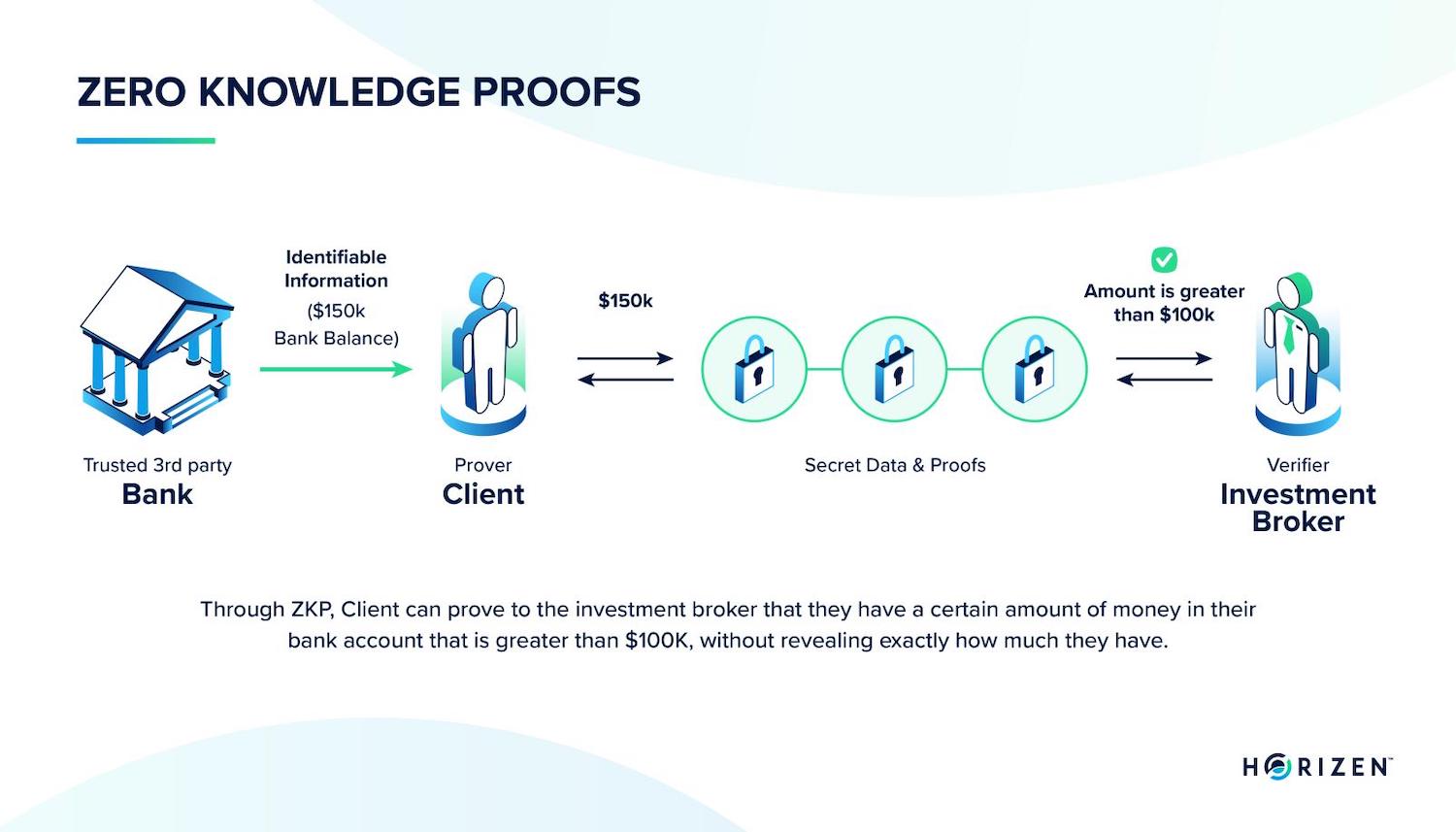
The Prover: Generating the Proof
The process begins when the freelancer generates a cryptographic proof. This is not a simple signature; it is a complex mathematical artifact derived from the execution of the task. The prover runs the task logic within a specialized environment, often using a circuit that translates the business rules into a format suitable for zero-knowledge verification.
Once the task is complete, the prover creates a succinct proof that attests to the correctness of the computation. This proof is much smaller than the original data, making it efficient to transmit. The freelancer sends only this proof and the public parameters to the client, keeping the raw task data entirely private.
The Verifier: Checking Validity
The client receives the proof and runs a verification algorithm. This algorithm checks the mathematical validity of the proof against the public parameters and the stated requirements of the task. If the proof is valid, the client can be cryptographically certain that the task was completed according to the rules.
This verification happens instantly and without the client ever seeing the underlying data. The client knows the result is true, but gains no additional information about how the result was achieved. This ensures that intellectual property, personal data, and proprietary methods remain confidential while still satisfying audit or compliance requirements.
Time Complexity and Efficiency
The efficiency of this system depends heavily on the time complexity of generating and verifying the proof. Modern zero-knowledge systems aim for sub-linear verification times, meaning the cost to verify does not grow linearly with the size of the data.
The chart above illustrates market volatility, but in the context of ZKPs, we look at computational complexity. A good ZKP system ensures that verification is fast enough to be practical for real-time remote work verification, while generation remains feasible for the prover. This balance is critical for adoption in high-stakes legal and regulatory environments where both speed and security are non-negotiable.
ZK verification vs traditional audits
Traditional remote work audits rely on invasive surveillance: screenshots, keyloggers, and continuous time-tracking software. These methods force employees to reveal their entire digital workspace to prove they are working. ZK verification flips this model. It allows a worker to prove a task is complete without exposing the underlying data or their daily habits.
The difference is not just technical; it is cultural. Traditional audits create a panopticon effect, lowering morale and increasing turnover. ZK verification treats proof as a cryptographic stamp rather than a surveillance log. This distinction drives efficiency gains that go beyond simple cost savings.
The table below compares the operational realities of both approaches across four critical dimensions.
| Metric | Traditional Audits | ZK Verification |
|---|
No comments yet. Be the first to share your thoughts!