
What zero-knowledge proofs actually do
Zero-knowledge proofs (ZKPs) are a cryptographic method that allows one party to prove to another that a statement is true without revealing any information beyond the validity of the statement itself [1]. This mechanism decouples verification from disclosure, enabling systems to confirm the integrity of data—such as a valid transaction or a compliant identity—without exposing the underlying sensitive details.
In traditional verification, you must share the secret to prove you know it. With zero-knowledge proofs, you generate a cryptographic "proof" that demonstrates you possess the correct information. If the proof is valid, the verifier accepts the claim as fact. This is essential for trustless task verification, where privacy and security are paramount. For instance, a user can prove they have sufficient funds for a transaction without revealing their entire balance or transaction history to the network.
This approach is becoming the 2026 standard for trustless task verification because it resolves the inherent tension between transparency and privacy. By relying on mathematical certainty rather than trust in a central authority, ZKPs enable scalable, private verification across finance, identity, and blockchain infrastructure.
Why freelancers need privacy-preserving verification
Decentralized freelance platforms promise freedom, but they often demand total transparency. To prove competence, freelancers must frequently share entire codebases, financial records, or client data. This creates a dangerous asymmetry: the client gains access to intellectual property that could be used to replicate the work or undercut future rates. Traditional verification requires handing over the keys to the kingdom, exposing sensitive trade secrets to anyone with a login.
Zero-knowledge proofs solve this by allowing you to prove a statement is true without revealing the underlying data. Imagine proving you have a valid passport without showing your face, name, or passport number. In the context of freelance work, you can cryptographically prove you have completed a task, meet specific skill requirements, or are eligible for insurance payouts without exposing your proprietary methods or personal identity. The verifier checks the proof and accepts the result, remaining completely ignorant of the private inputs.
This shift is critical for reputation management and IP protection. When you submit a proposal or a completed milestone, a zero-knowledge proof can validate your credentials against a decentralized identity registry without leaking your full work history or client list. This prevents competitors from scraping your data or clients from using your unique approaches to bypass you. The protocol verifies the truth of the claim, ensuring trustless execution while keeping your business logic private. As noted by the Ethereum Foundation, this method proves validity without revealing the statement itself, creating a secure boundary between verification and exposure ethereum.org.
Comparing ZKPs to traditional verification models
Use this section to make the Zero-Knowledge Proofs decision easier to compare in real life, not just on paper. Start with the reader's actual constraint, then separate must-have requirements from details that are merely nice to have. A practical choice should survive normal use, maintenance, timing, and budget. If a recommendation only works in an ideal situation, call that out plainly and give the reader a fallback path.
| Factor | What to check | Why it matters |
|---|---|---|
| Fit | Match the option to the primary use case. | A good deal still fails if it does not fit the job. |
| Condition | Verify age, wear, and service history. | Hidden condition issues erase upfront savings. |
| Cost | Compare purchase price with likely upkeep. | The cheapest option is not always the lowest-cost option. |
How ZK-Rollups scale task verification
ZK-Rollups solve the bottleneck of on-chain verification by batching thousands of task submissions into a single cryptographic proof. Instead of executing every task check individually on the main chain, the rollup processes them off-chain and submits only the proof and minimal state data. This shifts the computational heavy lifting away from the base layer, allowing for high-throughput verification at a fraction of the cost.
The economic implication is significant. As Ethereum gas prices fluctuate, the fixed cost of submitting a ZK-proof remains relatively stable and low. This predictability makes ZK-Rollups the preferred infrastructure for high-volume task markets where micro-payments are common. A TechnicalChart of ETH/USD helps contextualize this: when Layer 1 gas spikes, the relative value of Layer 2 scaling solutions like ZK-Rollups increases sharply, driving adoption in task verification sectors.
This architecture enables trustless verification at scale. By relying on the mathematical security of zero-knowledge proofs, the system ensures that the aggregated state is valid without requiring every participant to re-execute the tasks. This creates a scalable, low-cost environment for verifying digital work, aligning with the standards promoted by initiatives like the ZKProof community.
Learn more about ZKProof standards
Real-world examples of ZKP in action
Zero-knowledge proofs move beyond theory into daily infrastructure, primarily through identity verification and code auditing. These use cases demonstrate how trustless task verification protects privacy while maintaining rigorous standards.
Identity without PII
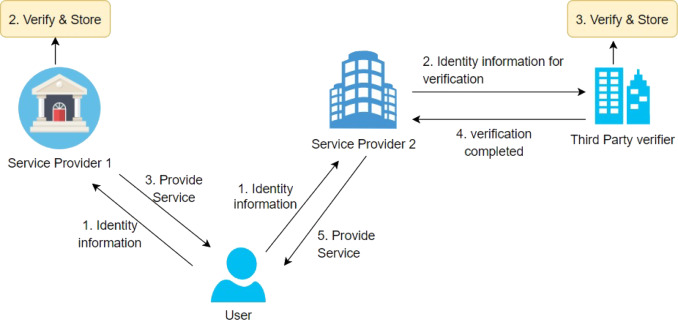
Digital identity systems use ZKPs to prove eligibility without exposing personal data. For example, a user can prove they are over 18 or a citizen of a specific country without revealing their birthdate or passport number. Ethereum.org highlights this capability, noting that the prover validates a statement without revealing the statement itself, keeping sensitive information private.
Code Quality Verification
In software development, ZKPs allow developers to verify code correctness or security audits without exposing proprietary algorithms. This is critical for commercial software where source code is intellectual property. The verification process acts like a tamper-proof stamp on an opaque envelope, confirming the logic is sound without opening the package.
Privacy-Preserving Transactions
Financial applications utilize ZKPs to validate transaction amounts without revealing sender, receiver, or balance. This ensures compliance with anti-money laundering laws while preserving user anonymity. The blockchain confirms that funds were split correctly without exposing the underlying financial history.
Frequently asked questions about zero-knowledge proofs
Zero-knowledge proofs (ZKPs) are often misunderstood as theoretical math rather than deployed infrastructure. These questions address common misconceptions and clarify how ZKPs function in practice.
These answers clarify that ZKPs are a mature, legitimate cryptographic tool rather than a speculative concept. Understanding the difference between theoretical examples and live implementations helps separate marketing hype from actual utility.
No comments yet. Be the first to share your thoughts!