
The 2026 ZK verification pivot
Zero-knowledge (ZK) proofs are undergoing a structural shift in 2026. What began as a niche privacy tool for hiding transaction details is now becoming core infrastructure for scalable, verified tasks on Layer 1 networks. This transition marks a move from obscurity to utility, where cryptographic proofs serve as the primary mechanism for validating data integrity at scale.
The catalyst for this change is Ethereum’s planned rollout. As reported by Whale Alert, Ethereum intends to allow validators to verify small ZK proofs directly on-chain. This move targets immediate Layer 1 scaling, with an ambitious goal of reaching 10,000 transactions per second (TPS). The rollout will begin with an opt-in phase in 2026, with mandatory implementation expected by 2027. This is not a speculative upgrade; it is a foundational change to how consensus is achieved.
The implications for the broader crypto market are significant. ZK technology is no longer just about "hiding your balance." It is quietly powering scalable trust. By moving verification from Layer 2 rollups to the base layer, Ethereum reduces latency and increases throughput without sacrificing security. This shift redefines ZK proofs from a privacy feature to a performance necessity.
The risk profile of this pivot is high. Integrating ZK verification into validator nodes requires significant computational resources and careful implementation to avoid centralization pressures. However, the potential reward—a native Layer 1 capable of processing thousands of transactions per second with cryptographic certainty—positions ZK as the backbone of the next generation of decentralized finance.
Comparing ZK infrastructure approaches
The 2026 landscape for ZK verified tasks is defined by a structural split in how proof verification is handled. The choice between native Layer 1 verification, ZK coprocessors, and ZK rollups dictates not just transaction costs, but the fundamental security model of the application. As RootData notes, 2026 marks a turning point for Ethereum's ZK scaling, with verification mechanisms undergoing a transformation akin to the Merge. This shift requires institutions to select infrastructure that aligns with their specific risk tolerance and throughput needs.
Native L1 Verification
Native L1 verification embeds proof verification directly into the consensus layer. This approach, exemplified by the XRP Ledger's integration with Boundless, allows institutions to verify transactions without revealing amounts, senders, or receivers. The primary advantage is maximal security; the proof is validated by the core network validators, eliminating reliance on external sequencers or secondary layers. However, this comes at the cost of throughput and gas efficiency, as every node must execute the verification logic.
ZK Coprocessors
ZK coprocessors act as specialized off-chain engines that handle specific, heavy computational tasks. According to Space and Time, these services verify identities or process large datasets independently before submitting a succinct proof to the main chain. This model offers superior scalability for data-heavy operations, such as decentralized identity (DID) or complex financial audits, without congesting the base layer. The trade-off is a slight increase in complexity, as the application must manage the interaction between the main chain and the coprocessor service.
ZK Rollups
ZK rollups bundle hundreds of transactions into a single proof submitted to the main chain, significantly reducing costs and increasing speed. Projects like those listed on ZK Rollups.io are leading the industry by comparing technology and transaction speeds to optimize fintech decisions. This approach is ideal for high-frequency trading or consumer-facing applications where cost and speed are paramount. However, it introduces a dependency on the rollup operator for data availability and sequencer reliability, which can be a risk factor in high-stakes environments.
| Feature | Native L1 | Coprocessor | ZK Rollup |
|---|---|---|---|
| Security Model | Maximal (On-chain) | High (Off-chain proof) | High (Batched proof) |
| Throughput | Low | High | Very High |
| Complexity | Low | Medium | Medium |
| Cost per Tx | High | Low | Very Low |
| Best Use Case | High-value settlement | Data/Identity audits | High-frequency trading |
Selecting the right infrastructure requires weighing these trade-offs against the specific compliance and performance requirements of the task. For most institutional applications in 2026, a hybrid approach may emerge, leveraging coprocessors for data processing and rollups for execution, while retaining native L1 verification for final settlement.
Real world ZK use cases in 2026
Zero-knowledge proofs have moved beyond theoretical cryptography into active market infrastructure. In 2026, the dominant narrative has shifted from mere privacy to verifiable compliance. This transition allows institutions to participate in decentralized finance without exposing sensitive ledger data to public scrutiny.
Decentralized Identity and Credential Verification
Identity verification is the most immediate application of ZK technology. Projects like Cardano are integrating ZKPs to enable decentralized identity (DID), allowing users to prove age, citizenship, or professional credentials without revealing their underlying personal data. This capability is critical for regulated industries where "know your customer" (KYC) laws are strict. Instead of uploading passports to centralized databases, users generate a ZK proof that confirms they meet specific criteria. This reduces the attack surface for identity theft while maintaining regulatory compliance.
Private Transactions on Established Ledgers
Privacy is no longer exclusive to privacy coins. The XRP Ledger recently integrated with Boundless to bring native zero-knowledge proof verification to its network. This integration allows institutions to verify transaction validity without revealing amounts, senders, or receivers. Similarly, Zcash and Monero continue to utilize zk-SNARKs for anonymous transactions, but the 2026 trend is the embedding of these proofs into mainstream, high-throughput ledgers. This enables confidential corporate payments and inter-bank settlements that remain auditable by authorized parties only.
Bounties and Verified Task Markets
Verification services are emerging as a distinct asset class. Platforms like zkVerify facilitate incentivized testnets where developers build ZK dApps or integrate proof verification into existing projects. These bounties reward the creation of efficient proof circuits. The Verified zkEVM project, running through the end of 2026, combines grants and bounties to develop and apply these standards. This creates a market for "proof of work" that is itself verified cryptographically, ensuring that computational resources were used correctly without exposing the underlying code or data.
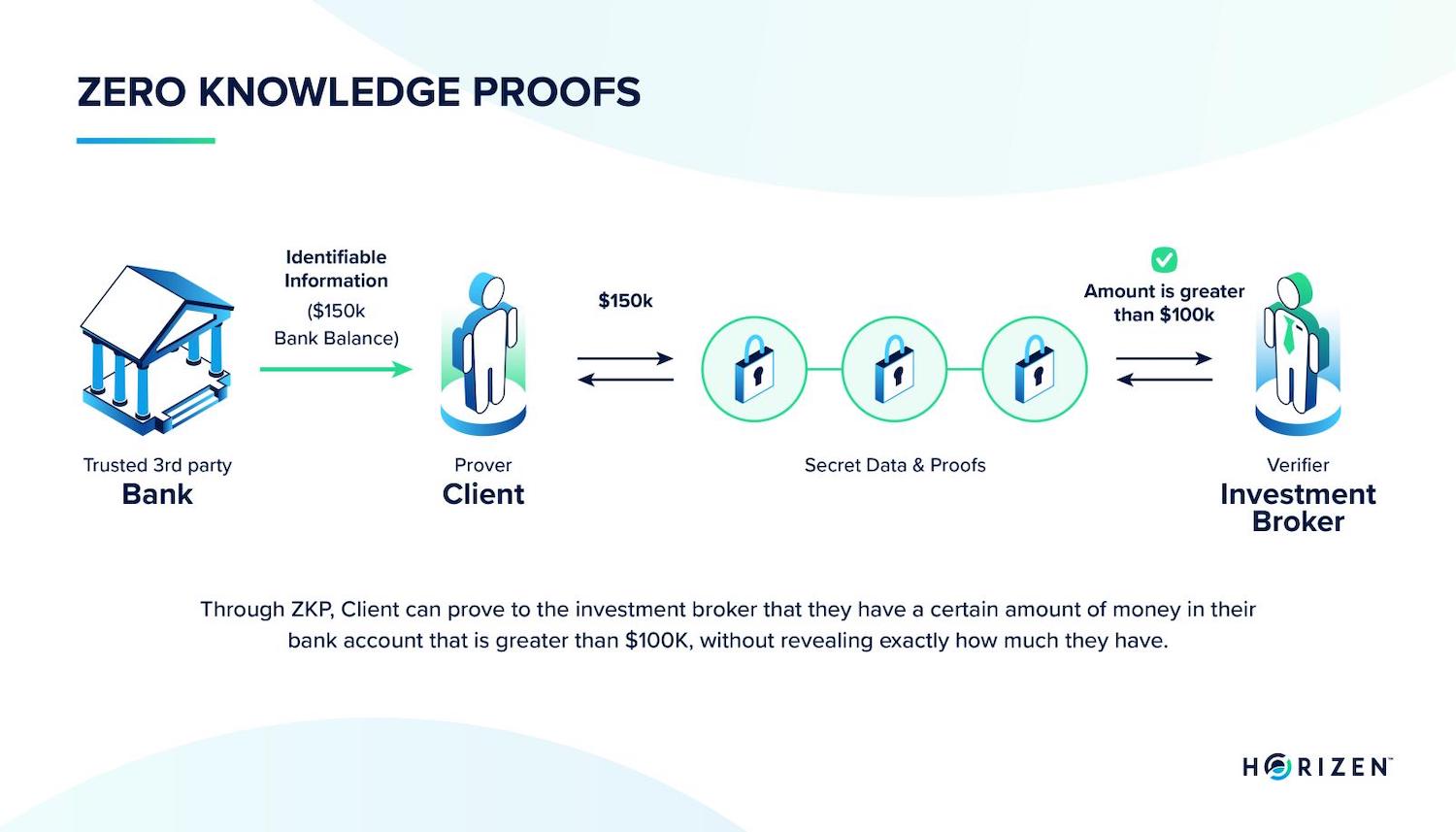
Choosing the right ZK verification path
Selecting a zero-knowledge verification architecture requires balancing three competing constraints: security guarantees, execution cost, and integration friction. There is no universal standard; the optimal path depends on whether the priority is institutional-grade auditability or consumer-scale throughput.
For applications where regulatory compliance and mathematical certainty are non-negotiable, formal verification remains the gold standard. Initiatives like the ZKProof Verified Verifiers working group establish cryptographic correctness for the underlying software. This path demands significant engineering overhead but provides the highest assurance for high-value transactions or institutional settlement layers.
In contrast, high-throughput environments often prioritize cost efficiency over formal proof. Ethereum’s 2026 rollout, which allows validators to verify small ZK proofs directly on Layer 1, targets ~10,000 TPS. This approach reduces gas costs by integrating verification into the consensus layer, making it viable for mass-market applications where individual transaction fees must remain negligible. The trade-off is a reliance on the security of the underlying consensus mechanism rather than independent formal verification.
The decision ultimately hinges on the asset’s velocity. Low-velocity, high-value settlements benefit from formal verification. High-velocity, low-value payments require native consensus integration to remain economically viable. Integrating the wrong model can render a protocol either too expensive to use or too risky to trust.
Common zk verification: what to check next
Investors often conflate zero-knowledge proof (ZKP) integration with consensus mechanisms or asset privacy. Clarifying these distinctions is essential for accurate market positioning. The following answers address high-intent queries regarding XRP, Ethereum, Cardano, and ZK-native assets.
These distinctions matter because ZK integration signals different value propositions: privacy for coins like XRP and Zcash, versus scalability for Ethereum Layer 2s. Misidentifying the use case can lead to incorrect risk assessments.
No comments yet. Be the first to share your thoughts!