
What are ZK verified tasks
A ZK verified task is a workflow where a worker proves they completed a specific action—such as data labeling, code review, or content moderation—without revealing the underlying data or their personal identity. This approach uses zero-knowledge proofs (ZKPs) to verify that a computation was done correctly without exposing the private inputs involved. In the context of gig work, this means you can demonstrate competence and completion while keeping your client’s sensitive information and your own identity secure.
Traditional freelance platforms rely on trust and transparency: clients see your profile, your history, and often the raw data you handle. ZK verified tasks flip this model. Instead of sharing the data itself, you generate a cryptographic proof that the work was done according to the rules. The client verifies the proof, not the data. This distinction is critical for privacy-preserving freelancing, especially when handling regulated or sensitive information.
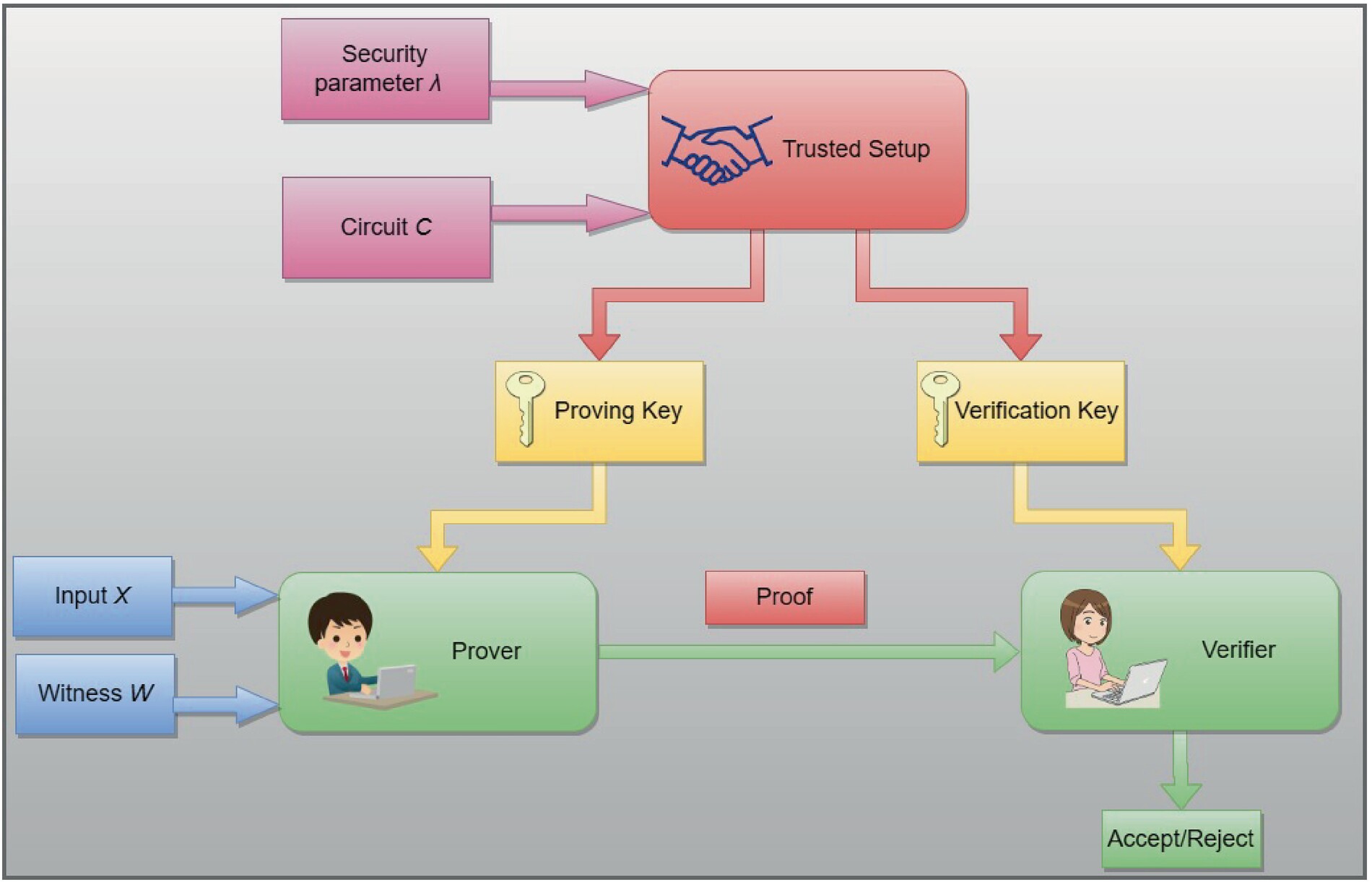
The technology works by having a prover (you) convince a verifier (the client or smart contract) that a statement is true without revealing any additional information. This eliminates the need for central intermediaries to audit every piece of data, reducing overhead and protecting both parties.
Choose your verification stack
Building ZK verified tasks requires more than just writing circuits; you need a reliable infrastructure to handle proof generation and verification at scale. For anonymous gig work, the bottleneck is often the cost and latency of proving, not the logic itself. Selecting the right stack depends on whether you prioritize developer speed, cost efficiency, or cryptographic flexibility.
Three primary options dominate the current landscape: managed verification networks like zkVerify, specialized data availability layers like Space and Time, and custom on-chain circuits. Each serves a different phase of the bounty platform lifecycle.
Comparison of Verification Options
The table below outlines the trade-offs between managed verification, data-specific proofs, and custom integration. For a gig platform, managed verification is often the fastest route to launch, while custom circuits offer the lowest long-term costs for high-volume tasks.
| Option | Cost Profile | Verification Speed | Ease of Integration |
|---|---|---|---|
| zkVerify | Low (pay-per-verify) | High (optimized backend) | Easy (API/SDK) |
| Space and Time | Medium (data-centric) | Medium | Medium (SQL-focused) |
| Custom Circuits | Low (self-hosted) | Variable | Hard (full stack dev) |
When to Use Each Stack
zkVerify is ideal for platforms that need to verify proofs from multiple different ZK languages (like Circom, Gnark, or Halo2) without managing the underlying hardware. It acts as a universal verifier, allowing your bounty platform to accept tasks verified by various tools. This is the best starting point for most new platforms.
Space and Time is specifically designed for verifying off-chain data queries. If your gig work involves verifying that a database record exists or that a specific SQL query returned correct results, this stack is more appropriate than a general-purpose verifier. It bridges the gap between traditional databases and ZK proofs.
Custom Circuits give you full control over the proving process. You can optimize the circuit specifically for your task logic, potentially reducing proof size and generation time. However, this requires significant engineering resources to maintain the proving infrastructure and ensure security. Use this only if you have a high volume of tasks and specialized knowledge.
Design the proof circuit
Building a ZK verified task starts with the circuit—the mathematical blueprint that defines what is allowed and what is hidden. Think of the circuit as a lock: it only opens (produces a valid proof) if the worker’s submission meets your specific rules, without showing you the key (the private data). For anonymous gig work, this means verifying completion criteria while keeping the worker’s identity and method confidential.
To design this circuit, you must translate your task requirements into boolean logic. This involves three distinct phases: defining constraints, generating a witness, and creating the final proof. Each step ensures that the verification process is both secure and efficient.
Start by listing every condition that must be true for the task to be considered complete. These are your public inputs. For a delivery gig, this might include the destination hash and the time window. For a coding task, it could be the successful compilation of a specific codebase. Anything you want the verifier to see goes here. Anything you want to keep private—like the worker’s wallet address or the exact steps taken—remains out of this list.
The witness is the complete dataset used to run the circuit. It combines your public inputs with private inputs (the secret data). The worker’s software calculates the witness locally. This step is critical because it proves that the worker actually performed the work. If the witness doesn’t satisfy the circuit’s logical gates, no proof can be generated. This ensures that only valid work submissions can proceed to the verification stage.
Finally, the circuit processes the witness to produce a succinct proof. This proof is a small cryptographic string that attests to the validity of the witness without revealing the witness itself. The verifier (you) checks this proof against the public inputs. If the check passes, the task is verified. The worker gets paid, and their privacy remains intact. This step transforms complex computation into a simple yes/no answer.
The choice of proving system (like zk-SNARKs or zk-STARKs) will impact the size of the proof and the speed of verification. For gig work, where transactions need to be fast and cheap, zk-SNARKs are often preferred for their small proof sizes, though they require a trusted setup. zk-STARKs offer quantum resistance and no trusted setup but result in larger proofs. Choose based on your platform’s scalability needs.
Deploy and verify on-chain
Once your zero-knowledge circuit generates a proof, the final step is submitting it to a blockchain or verification layer. This action triggers the smart contract to validate the computation and release payment to the gig worker. The goal is to ensure the system remains secure and immutable, confirming that the task was completed correctly without exposing sensitive data.
1. Prepare your proof and verification key
Before broadcasting, ensure your proof object contains the necessary circuit outputs and the verification key. This key acts as the reference standard the blockchain will use to check the proof’s validity. Double-check that the circuit constraints match the specific requirements of your gig task, such as proof of location or identity.
2. Estimate gas costs and select a network
Zero-knowledge proofs are computationally expensive to verify on-chain. Estimate the gas fees for your target network to ensure the cost of verification does not exceed the gig’s payout. Consider using Layer 2 solutions or specialized verification networks like zkVerify, which offer rapid and inexpensive proof verification for various zero-knowledge proof types.
3. Submit the proof to the verifier contract
Use your web3 wallet or SDK to call the verify function on your deployed smart contract. Pass the proof components and the verification key as arguments. The contract will execute the verification algorithm, checking if the proof is mathematically valid against the circuit constraints.
Ensure your proof object includes the circuit outputs and the verification key. This key serves as the reference standard for the blockchain to check validity.
ZK proofs are expensive to verify. Estimate gas fees to ensure verification costs don’t exceed the gig payout, or use specialized networks like zkVerify for lower costs.
Call the verify function on your smart contract with the proof and verification key. The contract will execute the verification algorithm to check mathematical validity.
4. Confirm transaction and receive payment
After submission, wait for the transaction to be confirmed on the blockchain. Once the verification succeeds, the smart contract will automatically execute the payment logic, transferring funds to the worker’s wallet. This immutable record serves as proof of task completion, resolving any disputes without revealing private data.
Common zk verification: what to check next
Users often hesitate to adopt ZK verified tasks because the underlying cryptography feels abstract. The core confusion usually centers on how a system can confirm work was done without exposing the worker's identity or the client's sensitive data. Understanding the mechanics helps clarify why this approach is both secure and private.
What is ZK verification?
ZK verification is the process of validating a zero-knowledge proof (ZKP) to confirm a statement is true without revealing the underlying data. In the context of gig work, it allows a platform to verify that a task was completed correctly without seeing the actual content or the worker's personal details. This creates a trustless environment where legitimacy is mathematically proven rather than centrally enforced.
Is zero-knowledge proof legit?
Yes, zero-knowledge proofs are a well-established cryptographic protocol. They are not experimental or risky; they are mathematically sound methods for verifying computations without exposing inputs. As noted by NTT Data, ZKPs bring "trustworthiness to the privacy of Web3," serving as an essential technology for secure, privacy-focused societies. The legitimacy comes from the rigorous mathematical proofs that guarantee no information leaks during verification.
How does ZKP verification work in practice?
Verification relies on a prover-verifier model. The prover (the worker or task executor) generates a proof that a specific computation was performed correctly. The verifier (the platform) checks this proof against public parameters. If the proof is valid, the verifier accepts the result as true. This process ensures that the client gets the desired outcome while the worker remains anonymous, as no intermediate steps or raw data are ever shared with the verifier.

No comments yet. Be the first to share your thoughts!