
Get zk verified tasks right
Before you start earning with zero-knowledge proofs, you need to understand what the network actually verifies. A ZK proof is a cryptographic method that confirms a computation happened correctly without revealing the inputs or intermediate steps. This mathematical soundness is what makes the tasks secure, but it also means the verification process is strict. If your setup doesn't match the protocol's requirements, the proof will fail, and you won't get paid.
Most beginners skip the prerequisite checks and assume any computer can handle the workload. This is a mistake. Zero-knowledge verification requires specific hardware capabilities and compatible software environments. You must ensure your machine meets the minimum specifications for the specific ZK circuit you are running. Check the official documentation for the exact requirements. Do not guess.
Also, verify the verifier's status. Not all ZK projects are created equal. Look for projects that are part of the ZKProof Verified Verifiers working group or have similar official audits. These groups formally establish the validity of proofs by ensuring the correctness of the cryptographic logic. Using an unverified verifier exposes you to security risks and potential loss of funds. Stick to official sources and primary audits to stay safe.
Work through the steps
Completing a ZK verified task requires more than just submitting data; it demands a cryptographically sound proof that the computation was performed correctly without exposing the underlying inputs. The process involves generating a proof on your local machine or a specialized node, which is then submitted to a blockchain verifier smart contract. This contract validates the proof’s mathematical integrity against a public verification key, ensuring the result is trustworthy without ever seeing your private data.
Follow this sequence to complete a standard ZK proof task securely.
Identify the specific ZK task on your chosen platform. Check the required circuit parameters, such as the number of constraints or the specific proving system (e.g., Groth16, Plonk) supported by the verifier. Ensure your hardware meets the computational demands for generating the proof, as some circuits require significant RAM and CPU resources during the proving phase.
Gather the private inputs required by the circuit. These are the data points you want to keep hidden from the public ledger, such as transaction details or identity attributes. Ensure all inputs are formatted exactly as the circuit expects, as even minor deviations will cause the proof generation to fail. Do not include any sensitive metadata that isn't part of the cryptographic statement.
Run the proving algorithm using your local tools or a trusted setup environment. This step creates a cryptographic proof that attests to the validity of your computation. The output will typically be a set of numbers (proof and public inputs) that can be passed to the verifier. Keep this proof file secure until submission, as it is the only evidence of your work.

Call the verification function on the deployed smart contract. Pass the proof data and the public inputs as transaction arguments. You will need to pay the network gas fees associated with this transaction. Once submitted, the contract will execute the verification algorithm to check if the proof matches the public verification key.
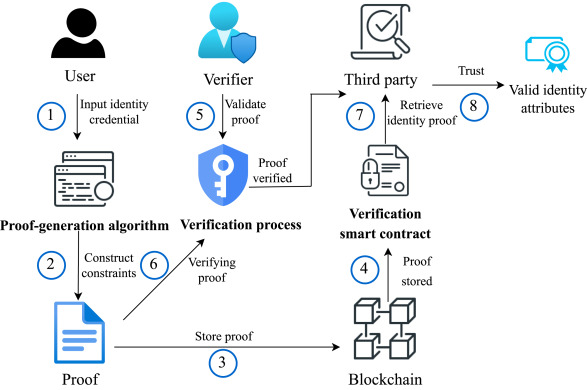
Wait for the transaction to be included in a block. Check the event logs or the transaction receipt to confirm that the verifyProof function returned true. If it returns false, the proof was invalid, likely due to incorrect inputs or a corrupted proof file. A successful verification marks the task as complete and may trigger any associated rewards or state changes.
Common ZK Proof Task Mistakes
Even with mathematically sound verification, human error introduces significant risk when executing zero-knowledge proof tasks. The most frequent failure points involve mismatched circuit constraints, invalid proof serialization, and ignoring gas limits during on-chain verification. These errors don't just waste time; they can result in rejected proofs, lost deposits, or, in high-stakes scenarios, compromised security.
Mismatched circuit limits to account for
A proof is only valid if the underlying circuit accurately reflects the task requirements. A common mistake is using a generic ZKP template without adjusting the constraint system for your specific data inputs. If the circuit expects a fixed-size array but receives a variable-length input, the proof generation will fail silently or produce an invalid proof. Always verify that your circuit's public and private inputs align exactly with the verifier's expectations.
Invalid Proof Serialization
Zero-knowledge proofs are complex binary structures. A frequent error occurs during serialization and deserialization, where the proof format (e.g., Groth16 vs. Plonk) doesn't match the verifier's expected format. This often manifests as a "proof verification failed" error on-chain or in the client-side verifier. Ensure you are using the correct proof system and that your serialization library handles the byte order and encoding precisely as specified by the protocol documentation.
Ignoring Gas Limits
On-chain verification of ZK proofs can be computationally expensive. A critical mistake is failing to estimate the gas cost before submitting the transaction. If the gas limit is too low, the transaction will fail, and you may lose the gas already consumed. Conversely, setting the limit too high doesn't save you money if the network charges based on actual usage, but it can lead to confusion in debugging. Always test verification costs on a testnet first and use official calculators to estimate on-chain costs.
Skipping Verification Checks
Finally, many users skip the final verification step, assuming the proof generation was successful. This is a dangerous oversight. Always run a local verification check using a trusted verifier, such as those listed on ZKProof.org, before submitting to a mainnet contract. This ensures the proof is mathematically valid and can be accepted by the smart contract, preventing costly rejections and potential security exploits.
No comments yet. Be the first to share your thoughts!