
Define the task and privacy limits to account for
Before writing a single line of code, you must map the bounty's data flow. The core value of ZK verified tasks lies in proving that work was completed without exposing the raw inputs. If you cannot clearly separate what must remain secret from what must be public, the circuit design will fail.
Start by listing every data point involved in the task. For a privacy-preserving bounty, this usually includes the worker's identity, the input data (such as a private document or code snippet), and the final output (such as a hash or a validated result).
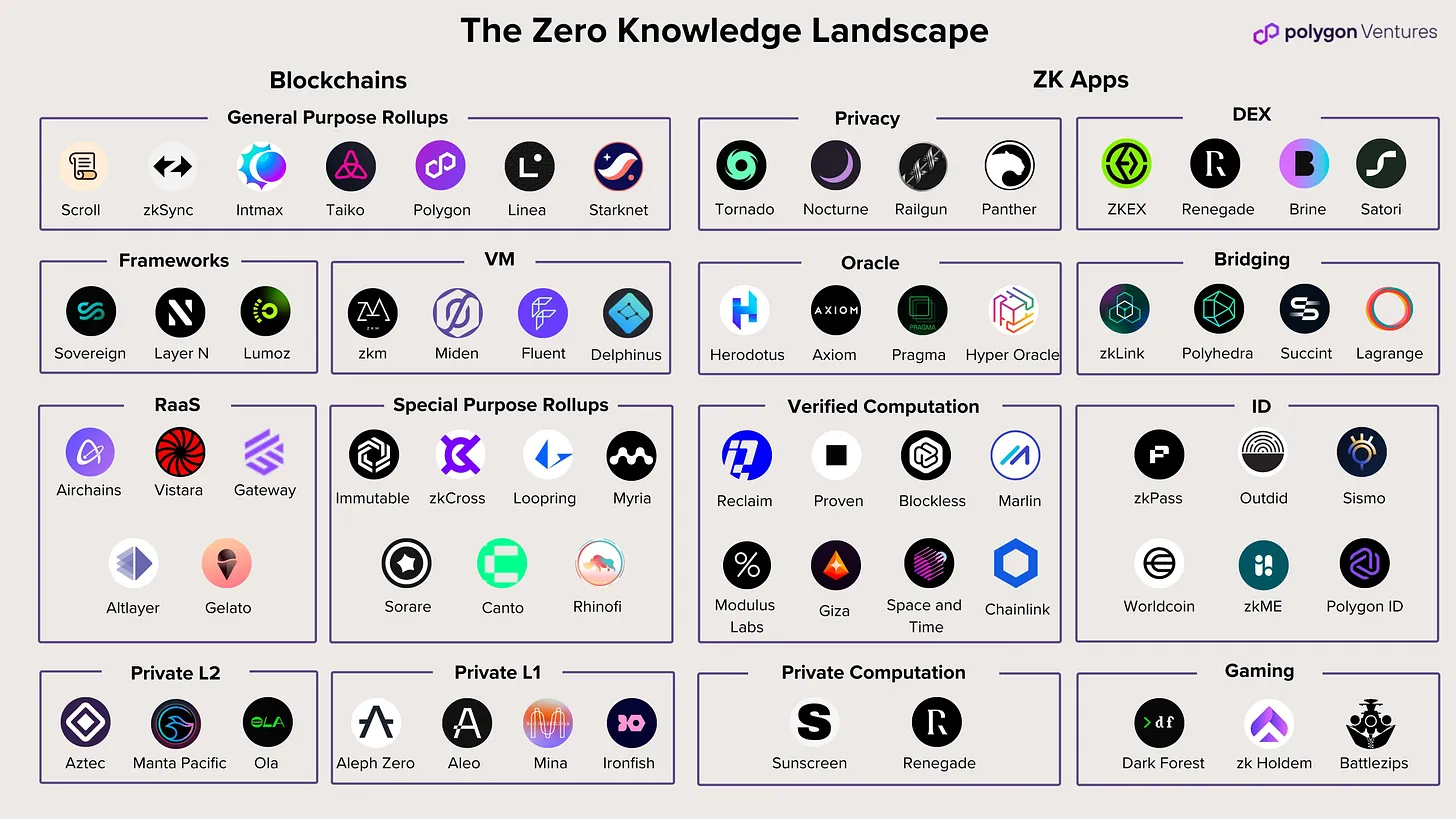
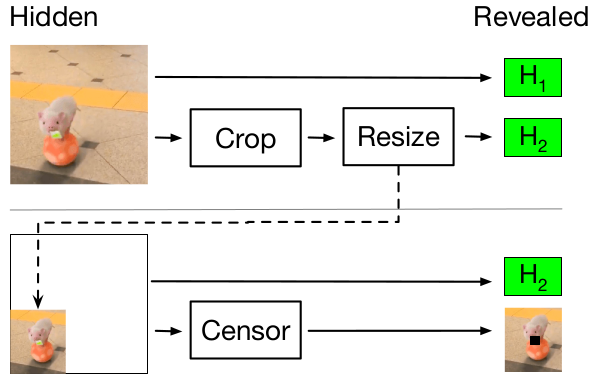
Next, define the public constraints. These are the variables the verifier needs to see to trust the result. In a typical gig economy model, the bounty poster might only need to see that the output meets specific criteria (e.g., "the code compiles" or "the image contains a specific object") without ever seeing the source material or the worker's personal details.
Any data point that does not contribute to this verification logic should be marked as private. Remember that ZK circuits are expensive to compute; exposing unnecessary data increases the circuit's complexity and cost. Keep the public interface as small as possible to maintain efficiency while maximizing privacy.
Write the circuit logic in Noir or Cairo
A ZK verified task is only as strong as the circuit that defines it. You are not writing application code; you are writing a mathematical proof that a specific set of conditions was met. The circuit acts as the engine, translating raw task data into constraints that a blockchain can verify without exposing the underlying information.
The process begins by selecting a language that matches your stack. Noir is a domain-specific language designed specifically for zero-knowledge proofs, making it intuitive for developers who want to focus on logic rather than low-level arithmetic. Cairo is the standard for StarkNet, offering a Rust-like syntax that integrates well with existing EVM-compatible workflows. Choose the tool that minimizes friction for your team.
1. Define the public and private inputs
Every ZK verified task requires a clear distinction between what is hidden and what is revealed. Private inputs are the sensitive data—such as a user’s location, salary, or identity credentials—that must remain confidential. Public inputs are the minimal set of facts that the verifier needs to accept the proof, such as a boolean "true" or a hash of the result.
Structure your circuit’s main function to accept these inputs explicitly. In Noir, this looks like defining fields in the main function. In Cairo, you define the struct that holds these values. Be precise here; any data you fail to mark as private will be exposed to the public verifier.
2. set the validation limits to account for
This is the core of the logic. You must translate your task’s business rules into mathematical constraints. If the task requires verifying that a user is over 18, you do not write if age > 18. Instead, you create arithmetic constraints that enforce this relationship.
For example, if you are verifying a signature, you use elliptic curve operations to ensure the signature matches the public key. If you are checking a range, you use bitwise constraints to ensure the number falls within a specific binary window. These constraints form the "circuit" that the prover will satisfy.
3. Compile to R1CS or AIR
Once your logic is defined, you compile the circuit into a format the verifier can understand. Noir compiles to R1CS (Rank-1 Constraint System), which is efficient for many proof systems. Cairo compiles to AIR (Algebraic Intermediate Representation), which is optimized for STARK proofs.
This compilation step generates the proving key and the verification key. The proving key is used by the user to generate the proof, while the verification key is deployed to the smart contract. Ensure your compilation process is deterministic; any change in the circuit logic will invalidate existing proofs.
Separate sensitive data from public facts. In Noir, declare private fields; in Cairo, define the input struct. This boundary determines what remains hidden on-chain.
Translate business rules into arithmetic. Replace logical operators with constraint gates that enforce truth without revealing the underlying values.
Generate the proving and verification keys. This step creates the mathematical blueprint that allows the smart contract to validate the proof efficiently.
Writing circuits requires a shift in thinking. You are not just checking conditions; you are building a mathematical argument that can be verified in seconds. This process is detailed in resources like the Succinct blog, which breaks down how these proofs work in practice. By following these steps, you ensure that your ZK verified tasks are both secure and scalable.
Generate and submit the proof
With the circuit compiled and the witness data prepared, you are ready to produce the cryptographic evidence. This stage transforms raw task execution into a verifiable claim that the network can trust without seeing the underlying details. The goal is to create a compact proof that confirms the ZK verified tasks were completed correctly.
1. Run the prover to generate the proof
Use your chosen proving system (such as Halo2, Gnark, or Noir’s prover) to process the witness data against the circuit constraints. The prover performs the heavy mathematical lifting, ensuring every constraint holds true. Once the constraints are satisfied, it outputs a proof object—typically a set of field elements or a serialized binary blob. This proof is the cryptographic signature of your work.

Ensure your circuit code is compiled into a proving key. Prepare the witness data containing your private inputs (e.g., task results) and public inputs (e.g., task ID). The witness is the "secret" that proves you know the solution to the puzzle defined by the circuit.
Run the prover function using your prepared witness. This step generates a compact proof (e.g., a SNARK or STARK) that attests to the correctness of the computation. The output is a small, fixed-size data structure that contains no private information, only the proof of validity.
Send the generated proof and public inputs to the verifier contract or zkVerify service. The verifier checks the proof against the circuit’s verification key. If valid, the contract marks the ZK verified tasks as complete, unlocking the bounty or updating the state.
2. Submit to the verification layer
Once you have the proof, it must be submitted to the network’s verification layer. This is typically a smart contract on a blockchain or a dedicated verification service like zkVerify. The contract contains the verification key for your circuit. When you submit the proof, the contract executes a pairing-based check (for SNARKs) or a polynomial evaluation (for STARKs) to ensure the proof is mathematically valid.
The verification process is fast and deterministic. If the proof is valid, the contract emits an event confirming the task completion. If the proof is invalid or the public inputs don’t match, the transaction reverts. This ensures that only legitimate, correctly executed tasks are rewarded, maintaining the integrity of the bounty system.
Verify the proof on-chain or off-chain
Once your ZK verified tasks are complete, the final step is proving the work was done correctly. You have two main paths: verifying the proof directly on the blockchain or using an off-chain service. The choice depends on your budget, speed requirements, and the specific privacy needs of your bounty.
On-chain verification
Verifying directly on-chain means the smart contract checks the proof itself. This offers the highest level of security and decentralization because no third party is trusted. However, this method is expensive and slow. Gas fees for on-chain verification can be prohibitively high, especially on Ethereum mainnet. It is best suited for high-value bounties where maximum security justifies the cost.
Off-chain verification with zkVerify
Off-chain verification delegates the heavy lifting to a specialized verifier like zkVerify. This service aggregates and verifies proofs, then submits a single, lightweight proof to the blockchain. This approach reduces verification costs to less than 1/100th of the on-chain cost. It is ideal for most bounty applications where speed and affordability are priorities, while still maintaining mathematical security.
Comparison: On-chain vs. Off-chain
| Feature | On-Chain Verification | Off-Chain (zkVerify) |
|---|---|---|
| Cost | High (expensive gas fees) | Low (reduced by >99%) |
| Speed | Slow (block confirmation times) | Fast (near-instant finality) |
| Security | Maximum (fully decentralized) | High (relies on verifier security) |
| Complexity | High (requires complex contracts) | Low (simple integration) |
Choosing the right verifier
For most ZK verified tasks, off-chain verification via zkVerify is the pragmatic choice. It allows you to scale your bounty program without burning through your budget on gas. If you are working with a small team or limited funds, this method provides the best balance of security and efficiency. Reserve on-chain verification only for cases where the stakes are extremely high and decentralization is non-negotiable.
Common pitfalls in ZK task verification
The easiest mistake with Build ZK Verified Tasks for Privacy-Preserving Bounties is comparing options on the most visible detail while ignoring the day-to-day constraint. A choice can look strong on paper and still fail because it is too hard to maintain, too expensive to repeat, or awkward in the actual setting. Use the same checklist for every option: fit, cost, durability, timing, upkeep, and fallback plan. That keeps the comparison practical instead of drifting into preference alone.
The simplest way to use this section is to write down the real constraint first, compare each option against it, and choose the path that still works outside ideal conditions.
Final checklist for deploying ZK verified tasks
Before going live, verify that your ZK verified tasks are production-ready. This checklist ensures the cryptographic integrity of your privacy-preserving bounties.
- Circuit Validation: Run formal verification on your Noir or Circom circuit to ensure it correctly enforces all task constraints without loopholes.
- Proof Generation: Confirm that the prover can generate valid proofs within acceptable time limits for your specific ZKP system.
- Verifier Contract: Deploy the on-chain verifier and test it against known valid and invalid proofs to ensure gas costs and reversion logic are correct.
- Gas Optimization: Audit the verifier contract to minimize gas consumption, ensuring the bounty payout remains economically viable for users.
A rigorous pre-deployment check prevents costly exploits and ensures your ZK verified tasks operate securely at scale.
Frequently asked questions about ZK verified tasks
Understanding how ZK verified tasks function helps clarify why they are the backbone of privacy-preserving bounties. These questions address the core mechanics, legitimacy, and trade-offs of zero-knowledge technology.
No comments yet. Be the first to share your thoughts!