
What are ZK verified tasks
ZK verified tasks use zero-knowledge proofs to validate freelance work without exposing the underlying code or personal identity. This method allows a freelancer to prove they completed a job correctly while keeping their proprietary methods and private data hidden from the client.
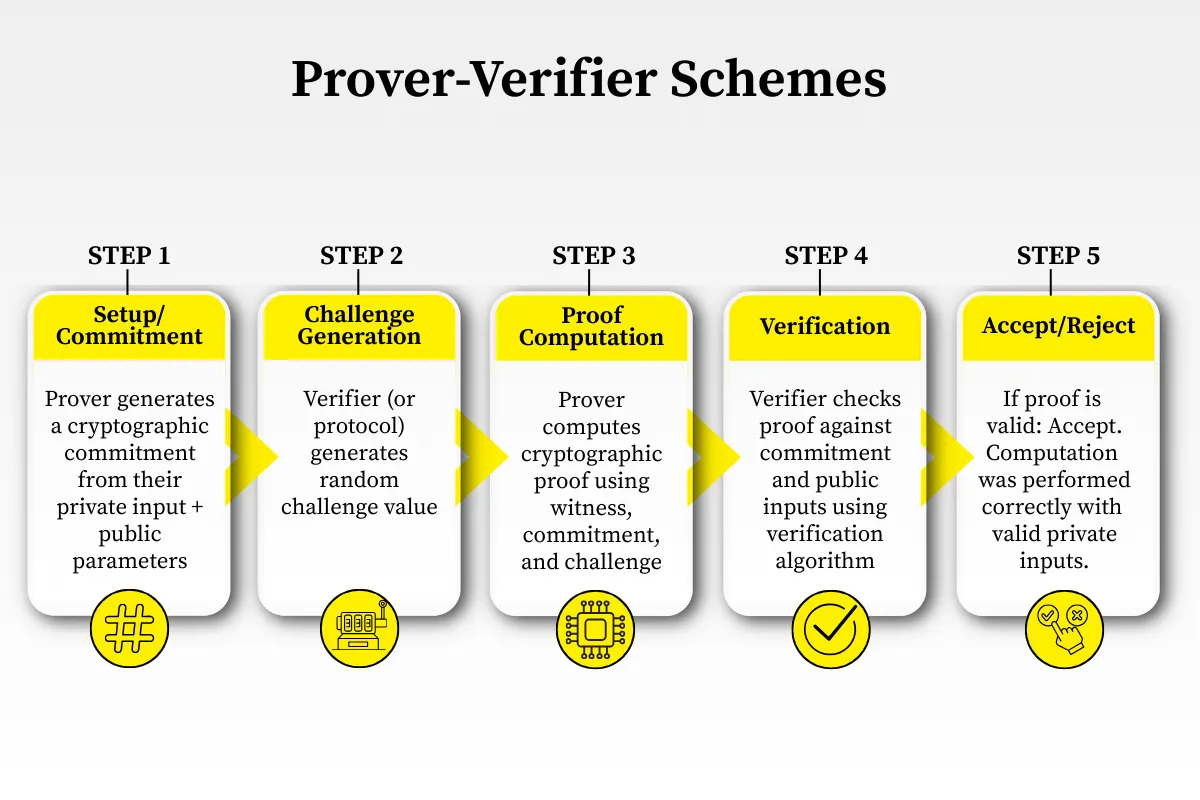
In a traditional remote workflow, clients often require full source code access or detailed time logs to verify quality. ZK verified tasks change this dynamic. The freelancer (prover) generates a cryptographic proof that the work meets the agreed-upon criteria. The client (verifier) checks this proof mathematically. If the proof is valid, the payment is released, even though the client never sees the actual work product.
This approach solves two major problems in remote work: trust and intellectual property protection. Freelancers can share their results without risking code theft or idea plagiarism. Clients get guaranteed verification of output quality without needing to audit every line of code or review every step of the process.
Set up your ZK proof environment
Before you can issue payments for ZK verified tasks, you need a local environment capable of generating cryptographic proofs. This setup acts as the foundation for your workflow, ensuring that every claim of work completed is backed by mathematical certainty.
The process involves installing the necessary proof generation libraries, defining the specific constraints of your freelance tasks, and configuring your key management system. You will generate these proofs locally to maintain privacy before submitting them to a verifier contract on the blockchain.
Begin by installing the zero-knowledge proof library relevant to your chosen framework, such as Circom or Halo2. Ensure your development environment has the correct dependencies, including any required compilers or runtimes, to handle the computational load of proof generation.
Next, formalize the rules of your freelance task into a circuit or smart contract logic. This step defines what constitutes a "verified" outcome. For example, if the task is data entry, the constraint might verify that the input matches a specific format or hash, without revealing the raw data itself.
Run your task data through the proof generator. This creates a compact cryptographic proof that attests to the correct execution of your constraints. Because this happens locally, you retain control over your private data, ensuring that only the verification result is exposed to the network.
Finally, submit the generated proof to the designated verifier contract. The contract checks the proof against the public parameters and your predefined constraints. If valid, the contract triggers the payment release, completing the ZK verified task cycle securely and efficiently.
Bridge off-chain work with on-chain proofs
The core challenge of ZK verified tasks is proving that work done in the real world—like coding a feature or designing a UI—actually happened and meets specific criteria without exposing the raw data. Think of this as creating a cryptographic receipt for labor. You don't show the employer your entire source code or design file; you show a mathematical proof that confirms the output matches the agreed-upon requirements.
This process relies on a prover-verifier model. The freelancer (prover) generates a ZK proof using a circuit that encodes the task rules. This proof is then submitted to a smart contract (verifier) on-chain. If the proof is valid, the contract automatically releases payment. This removes the need for trusted intermediaries and reduces disputes because the verification is mathematical, not subjective.
To ensure the proof matches the task, you must define precise public inputs. These are the visible parameters that the verifier checks, such as the hash of the final deliverable, the timestamp of completion, or specific metadata fields. The private inputs, like the actual code or design assets, remain hidden. This balance allows you to prove correctness while maintaining privacy and intellectual property rights.
Start by encoding the task requirements into a zero-knowledge circuit. This circuit acts as the rulebook, defining exactly what inputs are needed and what conditions must be met for the proof to be valid. For example, if the task is "write 100 lines of Rust code," the circuit might verify the hash of the file and the line count without revealing the code itself.
Run the proof generation process using your local tools. This step consumes computational resources to create a compact cryptographic proof that you completed the work according to the circuit's rules. The proof size is typically small, making it cheap and fast to submit on-chain, regardless of how complex the original task was.
Send the proof and the public inputs to the verification contract on the blockchain. The contract executes a lightweight verification algorithm to check the proof against the task parameters. If the math holds up, the contract triggers the next step, such as releasing escrowed funds to your wallet.
Once the contract confirms the proof, the payment is executed automatically. This final step ensures that you are compensated fairly and immediately, without waiting for manual review. The transparency of the on-chain record provides an immutable audit trail for both parties, reducing friction in freelance collaborations.
Integrate ZK proofs into payment workflows
The core advantage of ZK verified tasks is the ability to automate trust. Instead of waiting for manual approval or relying on a third-party escrow, smart contracts can verify the mathematical proof that work was completed. This allows payments to flow instantly upon proof submission, reducing friction for both freelancers and clients.
The Verification Flow
- Proof Submission: The freelancer submits a zero-knowledge proof to the smart contract. This proof confirms that specific conditions were met (e.g., code passed tests, design files uploaded) without revealing the underlying data.
- Contract Verification: The smart contract checks the proof against the public parameters. If the math holds, the contract marks the task as "verified."
- Automatic Release: Upon successful verification, the contract automatically releases the locked funds to the freelancer’s wallet. No manual intervention is required.
Privacy and Security Benefits
This workflow protects sensitive business logic and personal data. Clients don’t need to see the freelancer’s internal processes or raw files to confirm completion. Similarly, freelancers don’t need to disclose their full identity or banking details to receive payment. The ZK proof acts as a private key to the transaction, ensuring only the necessary verification data is shared.
Common questions about ZK verified tasks
New adopters often hesitate when they see cryptographic terms in a payment workflow. Understanding how ZK verified tasks handle data and verification removes the friction from signing contracts and releasing funds.
These questions address the core concerns about legitimacy and utility. The technology is not experimental; it is a standard tool for privacy-preserving verification.
No comments yet. Be the first to share your thoughts!