
What ZK verified tasks actually do
ZK verified tasks allow you to prove you completed work without revealing the work itself. In traditional remote work, a client often demands source code, screen recordings, or access to proprietary systems to ensure a job was done. Zero-knowledge proofs (ZKPs) flip this model. They provide a mathematical certificate that a specific condition was met—such as "code compiles" or "data is valid"—without exposing the underlying inputs or intermediate steps.
This approach is essential for privacy-preserving freelancing. It protects your intellectual property from theft and keeps your personal identity separate from your professional output. You can submit a proof that your task is correct, and the client can verify it instantly, all while remaining blind to your methods.
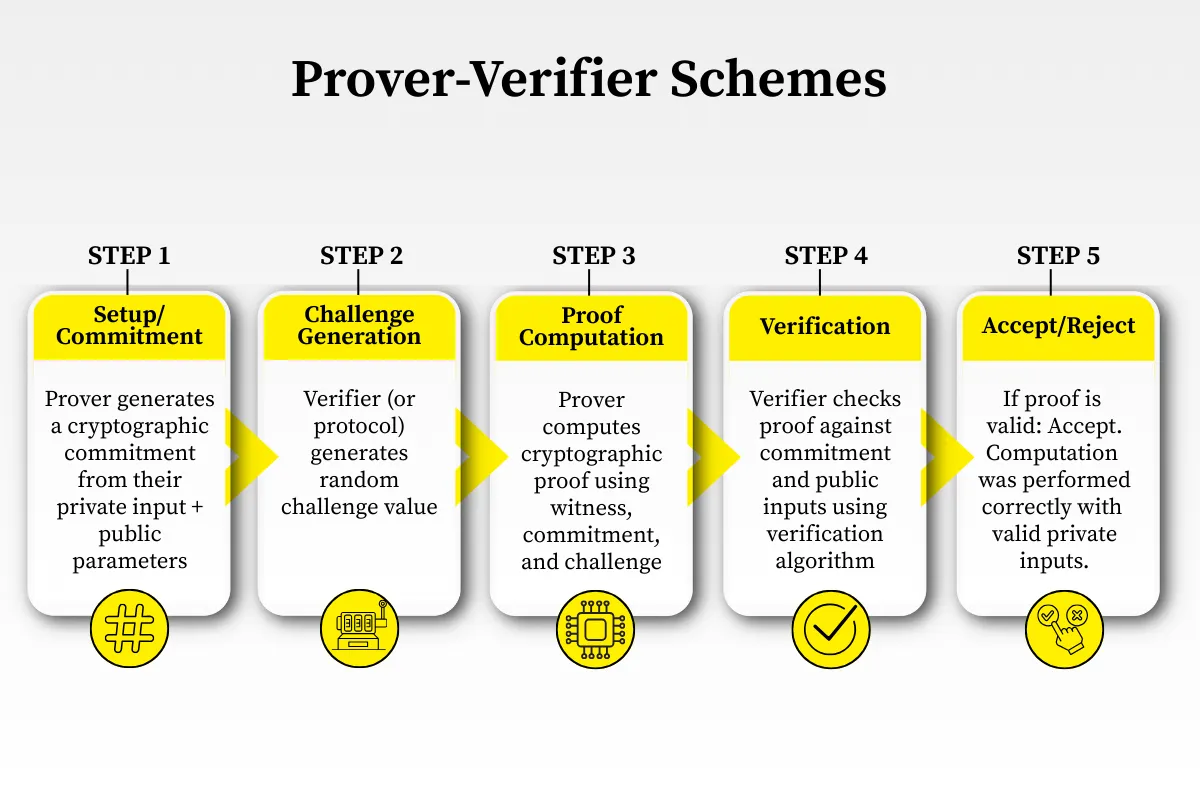
The core mechanism relies on a prover and a verifier. The prover generates a compact proof attesting to the correctness of a computation. The verifier checks this proof using minimal resources, confirming validity without ever seeing the raw data. This separation ensures that sensitive information—whether it is trade secrets, personal identity, or confidential datasets—remains secure while still enabling trust in remote collaborations.
Choose your verification layer
Setting up ZK verified tasks starts with picking the right infrastructure. You generally have two paths: using a specialized Layer 1 like zkVerify or leveraging general-purpose Layer 2s like Polygon or Arbitrum. The choice depends on whether you prioritize raw cost efficiency or ecosystem integration.
zkVerify operates as a universal verification layer. It is designed to handle high-throughput proof verification at a fraction of the cost of general-purpose chains. For remote work applications where you might verify thousands of task completions, this specialization pays off. Proofs are verified in seconds, and the cost to verify a single proof is often less than 1/100th of the cost on Ethereum L2s. This makes it ideal for high-frequency, low-value tasks.
General-purpose L2s offer a different trade-off. They allow you to verify ZK proofs natively within existing smart contracts on networks like Polygon or Arbitrum. This approach is simpler if your team is already built on these ecosystems, as it avoids the complexity of bridging to a new chain. However, you will pay higher gas fees for each verification call, which can add up quickly at scale.
| Feature | zkVerify (L1) | Polygon / Arbitrum |
|---|---|---|
| Verification Cost | Extremely low (<$0.01) | Higher (Gas dependent) |
| Throughput | High (Specialized) | Standard L2 limits |
| Developer Complexity | Medium (New chain) | Low (Native integration) |
| Ecosystem | Growing | Mature |
For most remote work setups, the specialized layer wins on economics. If you are verifying hundreds of tasks daily, the gas savings on zkVerify are significant. If you are running a small pilot with few verifications, an L2 might be easier to deploy initially.
-
"Verify your proof format is compatible with the target chain"
-
"Calculate estimated monthly verification volume"
-
"Test gas costs on a testnet before mainnet"
-
"Ensure your smart contract can handle proof verification"
Build the proof generation pipeline
Setting up ZK verified tasks requires a structured pipeline where every action is traceable through cryptographic proof. You are not just writing code; you are defining a mathematical relationship that proves a task was completed correctly without exposing the underlying data. This process turns abstract remote work outputs into verifiable on-chain or off-chain assets.
1. define the circuit limits to account for
The foundation of any ZK system is the circuit—a set of mathematical constraints that define what constitutes a "valid" task. For remote work, this means translating business logic into arithmetic gates. If you are verifying a code commit count, the circuit must enforce that the number of commits matches the timestamp and the developer's ID.
Use a domain-specific language (DSL) like Circom or SnarkJS to write these constraints. The circuit acts as a rigid rulebook: anything outside its defined boundaries is automatically rejected. This ensures that the proof is only generated for tasks that strictly adhere to your predefined criteria.
2. Generate the witness
Once the circuit is defined, you need a witness. The witness is the private input data—the actual evidence that the task was performed. In a remote work context, this could be the raw logs of a data query, the hash of a submitted document, or the transaction hash of a payment.
The witness generation step takes this private data and calculates the intermediate values required by the circuit. Think of this as preparing the ingredients for a recipe; the circuit is the cooking method, but the witness is the actual food being cooked. This step must be done securely, ensuring that sensitive work data remains private and is never exposed in the final proof.
3. Compute the proof
With the circuit and witness ready, the prover engine computes the cryptographic proof. This is the most computationally intensive step, where the system demonstrates that the witness satisfies all circuit constraints without revealing the witness itself. The output is a small, fixed-size proof object.
This proof serves as the cryptographic guarantee of work done. It can be submitted to a smart contract or a verification service to trigger rewards, unlock access, or update a reputation score. The beauty of this step is that verification is fast and cheap, allowing for scalable, trustless validation of remote work outputs.
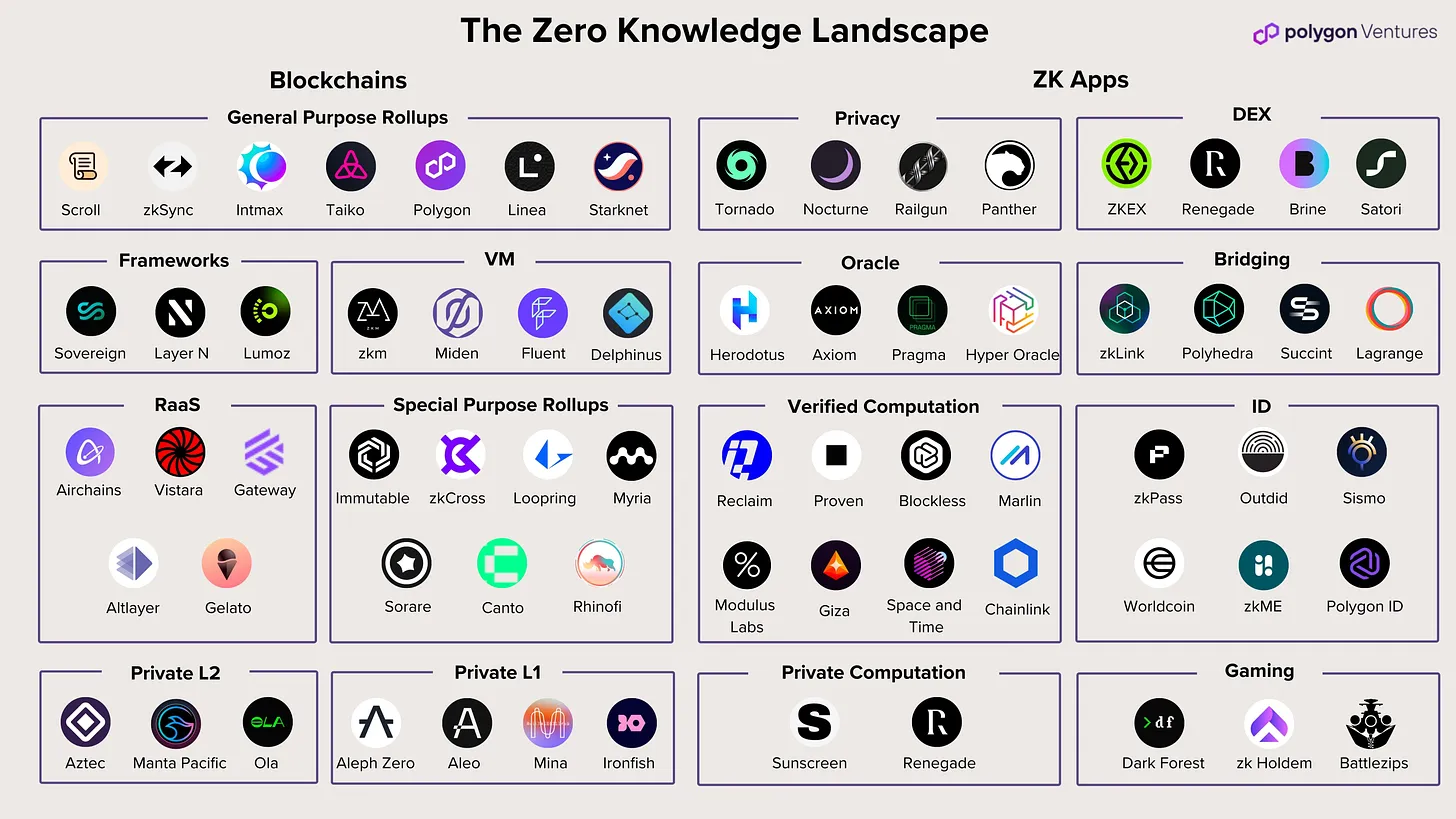
Translate business logic into arithmetic gates using a DSL like Circom. Ensure the circuit strictly enforces the rules of valid task completion, such as matching commit counts to timestamps.
Prepare the private input data (logs, hashes, transaction IDs) that serves as the witness. This step calculates the intermediate values needed by the circuit, keeping sensitive work data private.
Use the prover engine to generate the cryptographic proof. Submit this small, fixed-size proof to a verifier to trigger rewards or update reputation scores without exposing the underlying work data.
Deploy the verifier contract
The final step in setting up ZK verified tasks is deploying the smart contract that acts as the gatekeeper. This contract doesn't just store data; it actively validates the zero-knowledge proofs submitted by workers. Once deployed, it becomes the single source of truth for the bounty board, automatically releasing payment only when the cryptographic proof confirms the work was completed correctly.
Think of this contract as a secure vault with a unique key mechanism. The worker generates a proof that they solved the puzzle without revealing the answer. The contract checks this proof against the rules. If the math holds up, the vault opens and releases the funds. If the proof is invalid or missing, the transaction reverts, and no payment is made. This removes the need for human oversight or manual approval processes.
Integration with the task platform
To make this work in practice, your bounty board or task platform must be integrated with the deployed contract. The platform should handle the frontend interface where workers submit their proofs, but the actual verification logic lives on-chain. This separation ensures that the platform operators cannot tamper with the results or withhold payments arbitrarily.
When a worker submits a proof, the platform sends a transaction to the verifier contract. The contract executes the verification algorithm, which typically takes only seconds. Upon success, the contract triggers the payment function, transferring the agreed-upon amount to the worker's wallet. This automation creates a trustless environment where both parties can rely on the code rather than each other.
Ensure you have the correct network configuration and wallet credentials. Install the necessary SDKs or libraries that interface with the ZK proof verification logic. Verify that your local environment matches the testnet or mainnet parameters defined by the protocol documentation.
Define the reward amount, the specific ZK circuit to be used, and the allowed submitter addresses. These parameters determine how the contract behaves when receiving proofs. Double-check that the circuit ID matches the one used by your workers to generate proofs, as any mismatch will cause verification to fail.

Execute the deployment script to push the contract to the blockchain. Monitor the transaction until it is confirmed. Once deployed, record the contract address. This address is critical for the next step, as your task platform will need it to route submissions and verify proofs.
Update your bounty board's backend to point to the new contract address. Implement the API calls that send proofs to the contract and listen for verification events. Test the flow with a small batch of tasks to ensure payments are released automatically upon successful proof validation.
This setup creates a robust foundation for remote work. By relying on cryptographic verification, you eliminate the friction of manual review and the risk of fraud. The contract handles the heavy lifting, allowing you to scale your workforce without increasing administrative overhead.
Common pitfalls in ZK task design
Even with robust verification protocols, poorly designed circuits can undermine the entire workflow. The most frequent error occurs when developers expose too much data in public inputs. While it might seem convenient to broadcast job completion status or worker ID, doing so strips away the primary benefit of zero-knowledge proofs: privacy. Every extra byte in the public input increases proof size and verification cost without adding security value.
Another critical failure point is selecting circuits that are too expensive to prove. In remote work scenarios, where tasks may be executed on varied hardware, a circuit that requires significant computational resources can bottleneck the system. If proving time exceeds the task deadline, the verification becomes useless. Always benchmark witness generation against the expected hardware constraints of your remote workforce.
Finally, edge cases in witness generation often break systems in production. ZK proofs fail silently if the witness data is malformed or if the circuit constraints are not satisfied by valid edge-case inputs. For example, a task that involves dividing hours by days must handle zero-division scenarios explicitly within the circuit logic. Failing to account for these exceptions leads to proof generation failures that are difficult to debug.
Frequently asked questions about ZK tasks
Understanding zero-knowledge proofs (ZKPs) is essential for setting up verified remote work tasks. These cryptographic methods allow you to prove a statement is true without revealing the underlying data, which is particularly useful for privacy-preserving identity verification and task completion.
No comments yet. Be the first to share your thoughts!